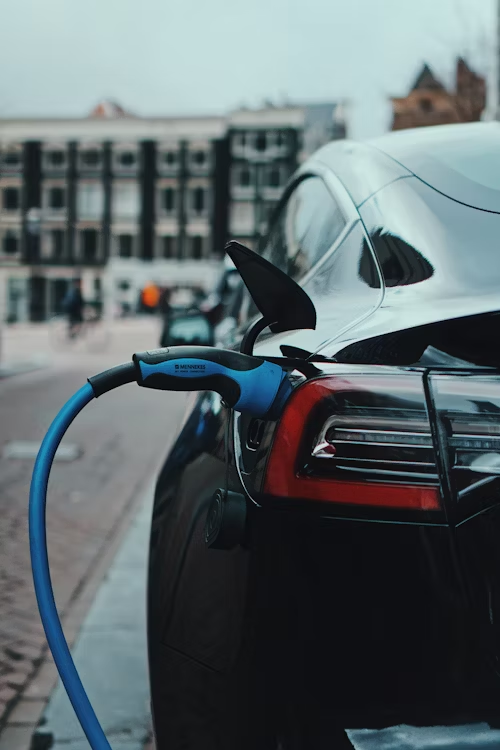
Is Your Ride Really Saving the Planet? My Dive into the True Colors of Eco-Friendly Cars

Ever wondered if that eco-friendly badge on your car is more than just a shiny ornament? As a tech-enthusiast and full-time skeptic, I’ve taken a deep dive into what really makes cars ‘green’ and let me tell you, it’s more tangled than headphone wires in your pocket.
Behind the Wheel of Green Promises
So here I am, scrolling through endless feeds of electric vehicles and smart car enhancements, and it hits me—how many of these glittering eco-claims are driving us towards a greener future, and how many are just... exhaust fumes?
Let’s be real, the world of electric mobility solutions is like a wild west of tech and promises. Everyone wants a piece of the ‘sustainable’ pie. But as someone who’s spent too many hours debugging software, I can smell over-hyped features from a mile away. Do these enhancements really reduce the carbon footprint, or are they just another way to make the cash registers ring louder?
In my ventures, both technological and familial (trust me, trying to coordinate a gadget-free dinner with teenagers is as complex as systems logistics), I’ve learned one thing: skepticism is your best friend. And it’s with this critical eye that I explore the real impact of these so-called eco-friendly car enhancements.
The Real Deal on Eco-Friendly Upgrades
Eco-friendly? Sure, it sounds great. But when rubber meets the road, what are we actually talking about? To me, it's not just about slapping a solar panel on the roof and calling it a day. It’s about sustainable practices across the entire lifecycle of the vehicle—manufacturing, operation, and even disposal.
And let’s not even get started on the upgrades. As much as I admire innovation (big shoutout to Tesla, although I can’t say I’m too keen on their autopilot just yet), are these smart enhancements genuinely reducing emissions, or are they simply making our rides a tad quieter while the planet heats up?
Peeling Off the Eco-Stickers
Just last week, I upgraded my ride with the latest ‘smart eco-turbo’ feature. Sounds fancy, right? Turns out, it’s just a new algorithm tweaking the A/C usage. Seriously, my refrigerator is more revolutionary. But here’s where it gets interesting. After some digging, I found that what really makes a difference are things like battery efficiency improvements and advanced materials reducing the overall weight.
List of Actually Useful Eco-Friendly Car Enhancements:
- Advanced regenerative braking systems
- High-efficiency battery designs
- Lightweight, sustainable materials for bodywork
- Solar panels that power vehicle electronics
- AI-driven energy management systems
- Bio-based tires reducing rubber waste
- Car-sharing tech to reduce overall vehicle production
- Recyclable parts and materials
- Non-toxic, plant-based paints
After all, if the future belongs to those who create it, let’s ensure our creations don’t just look pretty but do pretty for the Earth too, right?
And here’s the kicker: real change often comes not from flashy features but from fundamental shifts in how products are designed, used, and recycled. In my experience, diving into the tech specs and pushing past the marketing fluff has revealed more about the true colors of these vehicles than any polished ad ever could. So, what do you think? Are we driving towards a truly greener future, or are we just getting lost in a cloud of greenwash? Let's chat in the comments below!