What Are the Key Differences Between Advanced Mobility Solutions and Modern Car Technology?

I’ve spent more than a decade building software and systems that help people move smarter, faster, and sustainably. When I look at the current landscape of vehicle innovation, two terms keep surfacing: “advanced mobility solutions” and “modern car technology.” Although they overlap, they serve distinct purposes for consumers, fleet operators, and policymakers. In this article I break down what each term actually means, compare their core components, evaluate their business models, and outline the practical implications for anyone looking to invest or adopt in 2026.
Defining the Two Concepts
Advanced mobility solutions (AMS) refer to integrated services that combine vehicles with digital platforms, data analytics, and infrastructure changes. Think of ride‑share ecosystems, micro‑mobility hubs, autonomous shuttles, and multimodal trip planners that let a user choose the best mix of bike, bus, car, or drone.
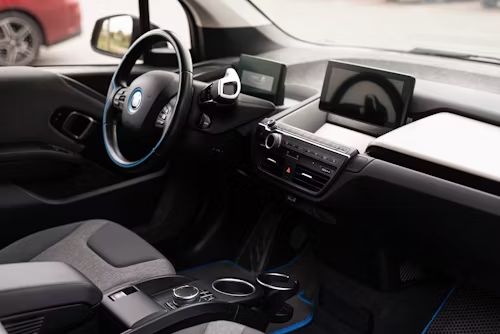
Modern car technology (MCT) focuses on the hardware and software inside individual vehicles. It covers electric powertrains, connectivity stacks, advanced driver‑assist systems (ADAS), infotainment upgrades, and over‑the‑air (OTA) update capabilities. MCT is about what a single car can do, not how it fits into a broader network.
In short, AMS is the “system of systems” that orchestrates movement across many actors; MCT is the technology stack that makes each individual vehicle smarter and safer.
Core Components and Features
Below is a side‑by‑side comparison of typical features you’ll find in AMS versus MCT platforms. I’ve grouped them into four categories: mobility, connectivity, data, and sustainability.
Mobility
- AMS: Dynamic routing across multiple transport modes; real‑time fleet positioning; flexible vehicle ownership models (pay‑per‑ride, subscription).
- MCT: Autonomous driving levels 2–5; lane‑keeping and adaptive cruise control; in‑car navigation with turn‑by‑turn voice.
Connectivity
- AMS: Cloud‑based APIs for third‑party developers; open data feeds to city planners; secure multi‑tenant dashboards.
- MCT: Vehicle‑to‑vehicle (V2V) and vehicle‑to‑infrastructure (V2I) radios; LTE/5G modules; OTA update frameworks.
Data
- AMS: Aggregated trip analytics for city traffic optimization; predictive maintenance across fleets; user behavior modeling.
- MCT: In‑vehicle telemetry (speed, battery SOC, sensor logs); driver profile data; crash‑avoidance event recording.
Sustainability
- AMS: Shared vehicle utilization curves; integration of electric and hydrogen micro‑mobility options; carbon‑offset calculation tools.
- MCT: Battery efficiency metrics; regenerative braking algorithms; low‑friction materials for chassis.
Business Models & Market Impact
The economic engines behind AMS and MCT differ significantly. I’ve mapped out the main revenue streams for each model to help you decide where your capital or talent should go.
Advanced Mobility Solutions Revenue Streams
- Platform Fees: Subscription charges to app developers and city operators for API access.
- Ride‑Share Commissions: Percentage of fare revenue from shared trips.
- Data Monetization: Selling anonymized mobility patterns to urban planners or insurers.
- Infrastructure Partnerships: Leasing micro‑mobility stations or autonomous shuttle spots.
Modern Car Technology Revenue Streams
- Hardware Sales: Direct sale of premium infotainment units, ADAS modules, and EV batteries.
- Software Licenses: Per‑vehicle licensing for navigation maps or OTA services.
- Service Contracts: Subscription to predictive maintenance or advanced safety packages.
- Data Services: Selling aggregated vehicle data to manufacturers, insurers, or third parties.
In my experience building a SaaS platform for fleet operators, the platform fee model proved the most scalable. The initial investment in API infrastructure paid off as more city agencies adopted the system over a 3‑year horizon.
Sustainability and Environmental Footprint
Both AMS and MCT aim to reduce emissions, but they tackle the problem from different angles. Below is a concise comparison of their environmental impacts in key categories.
Emission Reduction Strategies
- AMS: Encourages shared usage, lowering total miles driven per capita; integrates electric and hydrogen micro‑mobility options; promotes walking or cycling for first/last mile.
- MCT: Electric powertrains cut tailpipe emissions; regenerative braking recovers energy; lightweight materials improve fuel economy.
Lifecycle Impact
- AMS: Requires investment in charging infrastructure and maintenance fleets, but spreads the environmental cost over many users.
- MCT: Battery production has a high upfront carbon footprint; however, long-term operational emissions are low for fully electric vehicles.
When evaluating sustainability, I always look at the total cost of ownership (TCO). For AMS, TCO includes infrastructure leasing and software maintenance. For MCT, it focuses on energy consumption and battery replacement costs.
User Experience & Accessibility
A major differentiator between AMS and MCT is how they influence user interaction. I’ve distilled the key UX considerations into four actionable items for product managers.
Design Principles for Advanced Mobility Solutions
- Unified Interface: One app that shows all available modes with pricing and ETA comparisons.
- Contextual Assistance: Real‑time alerts about traffic, weather, or parking availability.
- Personalization: Machine learning models that recommend the most efficient route based on past behavior.
- Accessibility: Voice commands and high‑contrast UI for all users.
Design Principles for Modern Car Technology
- Simplicity: Minimalist HUD to avoid driver distraction; intuitive touch or gesture controls.
- Safety First: Fail‑safe defaults that revert to manual control when connectivity is lost.
- OTA Seamlessness: Background updates without interrupting driving experience.
- Data Privacy: Transparent data handling policies and user consent mechanisms.
I’ve seen first‑hand how a cluttered trip‑planning UI can turn users away from using an AMS platform. Conversely, a car with too many on‑screen options often causes driver distraction. Balancing richness of features with simplicity is the real challenge for both domains.
Smart Car Consulting and the Revolution
The term “smart car consulting” usually refers to advisory services that help automotive OEMs and fleet operators adopt AMS or MCT components. I’ve worked with several clients on this front, and here’s what they typically need:
Consulting Focus Areas
- Digital Strategy Alignment: Mapping business goals to technology roadmaps.
- Platform Integration: Connecting legacy vehicle systems to modern APIs.
- Regulatory Compliance: Navigating data privacy laws, safety standards, and emissions regulations.
- Change Management: Training staff, adjusting workflows, and setting KPIs for adoption.
The smart car revolution is not just about adding sensors to vehicles; it’s about embedding those vehicles into a broader digital ecosystem that delivers tangible value to users and operators alike. Companies that ignore either AMS or MCT risk falling behind in this integrated landscape.
Cost, ROI, and Implementation Challenges
Deciding whether to invest in AMS or MCT—or both—requires a realistic appraisal of cost structures and expected returns. Below are the main financial levers for each approach.
Advanced Mobility Solutions Cost Structure
- Initial Development: API layer, data pipelines, user interface – $200k‑$800k depending on scale.
- Infrastructure: Charging stations, micro‑mobility hubs – $50k per location.
- Operations: Staff for customer support, fleet maintenance, analytics – 20% of revenue annually.
Modern Car Technology Cost Structure
- Hardware Development: Sensors, ECUs, infotainment – $5k‑$15k per vehicle.
- Software Licensing: Map data, OTA servers – annual fee of $200–$500 per unit.
- Manufacturing Scale: Production volume discounts reduce per‑unit cost after 50k units.
ROI for AMS tends to be longer term, as you need to build a critical mass of users before the platform becomes self‑sustaining. For MCT, ROI can be realized within 2–3 years if you focus on high‑margin premium features and subscription services.
Common implementation pitfalls include underestimating data integration complexity, overpromising autonomous capabilities without sufficient testing, and ignoring local regulatory constraints that can delay rollouts.
In my experience, the biggest hurdle for AMS projects is aligning city stakeholders with different priorities—transportation agencies want reduced congestion, while tech partners push for open APIs. Negotiating a shared roadmap early on saves months of rework.Choosing between AMS and MCT—or deciding to pursue both in parallel—depends on your organization’s core strengths, market position, and risk tolerance. If you’re a startup with deep AI expertise but limited manufacturing capabilities, AMS may be the safer bet. Conversely, if you already have a robust supply chain for vehicle components, investing in MCT could unlock premium revenue streams.
What specific use case or market segment would you target first when integrating advanced mobility solutions with modern car technology?