The Rise of Electric Smart Cars: Steering Towards an Eco-friendly Revolution
The automotive industry is witnessing a significant transformation with the advent of electric smart cars. This shift is not just a trend but a profound revolution towards sustainable and intelligent urban mobility. The focus on smart car innovation and eco-modifications in vehicles is paving the way for a greener and more efficient future, dramatically altering how we think about transportation.
The Core of Smart Car Innovation
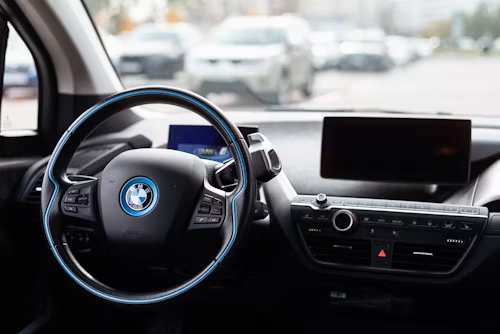
At the heart of the automotive industry's evolution is the integration of advanced technologies that enhance vehicle performance, safety, and environmental sustainability. Smart car innovation primarily focuses on harnessing the power of data and connectivity to bring about unprecedented levels of automation and user experience.
Key Technological Advancements
Modern smart cars are equipped with a multitude of sensors and systems designed to optimize the driving experience and minimize carbon footprints. These include:
Technological Enhancements in Smart Cars
- Autonomous driving capabilities
- Advanced battery technologies
- Integrated IoT for better vehicle management
- Energy-efficient power systems
Each of these technologies not only pushes the envelope in automotive design but also aligns with global sustainability goals, marking a significant stride in smart car innovation.
Transition to Electric Smart Cars
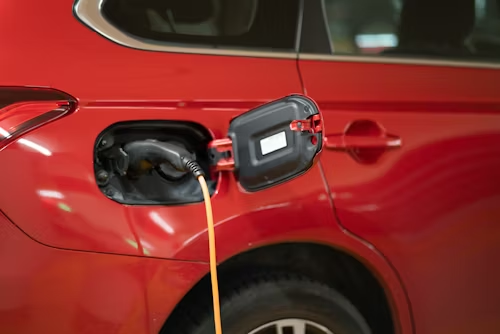
The shift towards electric smart cars is arguably the most impactful trend in the automotive sector today. This transition is largely driven by the need to reduce reliance on fossil fuels and cut down on greenhouse gas emissions.
Benefits of Electric Smart Cars
Electric vehicles (EVs) offer numerous advantages over their gasoline counterparts, including:
Advantages of Adopting Electric Smart Cars
- Lower emissions of harmful gases
- Reduced noise pollution
- Higher energy efficiency
- Lower operational and maintenance costs
Adopting electric smart cars not only supports environmental initiatives but also provides economic benefits to users, contributing to the broader smart car revolution.
Implementing Smart Car Eco-Modifications
Eco-modifications in smart cars are essential for reducing the environmental impact of our daily commutes. Manufacturers are continually exploring new ways to make cars cleaner and more energy-efficient.
Innovative Eco-Friendly Features
Several innovative features are being integrated into smart cars to enhance their ecological footprint. These include:
Eco-friendly Modifications in Smart Cars
- Solar panels for auxiliary power generation
- Use of recycled materials in car construction
- Biodegradable car components
- Programs for efficient route planning to save fuel
Such modifications not only help in conserving natural resources but also promote a sustainable lifestyle among consumers, reinforcing the ethos of smart car eco-modifications.
Future Prospects: The Smart Car Revolution
The future of smart cars is incredibly promising, with potential breakthroughs that could redefine mobility. As we progress, the lines between technology and automobiles are blurring, leading to more integrated, intelligent, and environmentally friendly transportation solutions.
What's Next in Smart Car Technology?
Emerging trends and future technologies that are likely to shape the next phase of the smart car revolution include:
Future Trends in Smart Car Technology
- Integration of AI to enhance user experience
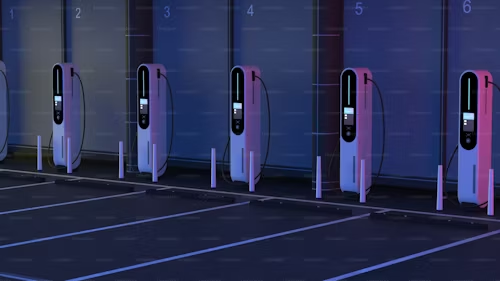
- Development of wireless charging infrastructures
- Improvements in autonomous driving algorithms
- Expansion of eco-friendly manufacturing practices
These advancements will not only make smart cars more accessible but also contribute significantly to a sustainable future, solidifying the role of electric smart cars in the automotive industry.
Tags: Smart car innovation, Smart car eco-modifications, Electric smart cars, Smart car revolution
In conclusion, the smart car revolution is much more than just a technological upgrade; it is a comprehensive rethinking of transportation that emphasizes efficiency, safety, and sustainability. By embracing these innovations, we are not just driving cars; we are driving change.