Exploring the Revolution of Smart Car Technology: Enhancements, Retrofits, and Zero-Emission Innovations

The automotive industry has undergone a significant transformation in recent years, spurred by advancements in technology and growing environmental concerns. The concept of 'smart car technology' is at the forefront of this revolution, offering a blend of enhanced safety features, improved efficiency, and a commitment to reducing carbon emissions. In this blog post, we will delve into the realms of smart car enhancements, smart vehicle retrofitting, and zero-emission vehicles, exploring how these technologies are shaping the future of transportation.
What is Smart Car Technology?
Smart car technology refers to the integration of advanced electronic systems and connectivity features in vehicles that provide enhanced navigation, safety, and entertainment services. These technologies are designed to improve the driving experience, increase vehicle efficiency, and reduce environmental impact. Some key features of smart car technology include autonomous driving capabilities, real-time traffic updates, predictive maintenance alerts, and energy-efficient systems.
The Rise of Smart Car Enhancements
As the demand for more efficient and safer vehicles increases, automakers are continuously working on smart car enhancements. These enhancements are not only focused on new vehicles but also offer options for owners who wish to upgrade their existing cars. The following are some prominent smart car enhancements:
- Advanced Driver-Assistance Systems (ADAS): These systems help with monitoring, warning, braking, and steering tasks with features like adaptive cruise control, lane-keeping assist, and automatic emergency braking.
- Connected Car Services: Vehicles equipped with internet connectivity allow drivers to receive real-time traffic updates, find parking, and even stream multimedia content.
- Energy Management Systems: Smart technology helps in optimizing battery usage in electric vehicles (EVs), thereby enhancing their range and lifespan.
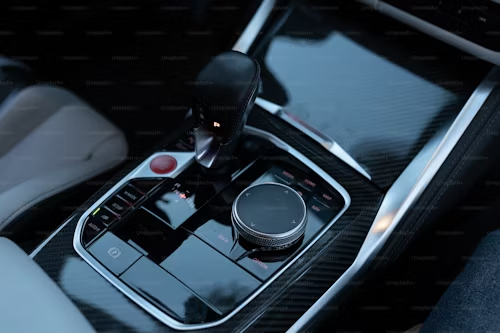
- User Interface Improvements: Modern vehicles feature large touchscreens and voice-activated controls, significantly enhancing user interaction and convenience.
Smart Vehicle Retrofitting: Giving Old Cars New Life
Not everyone can afford a brand new smart vehicle, but that doesn't mean they have to miss out on the benefits of modern technology. Smart vehicle retrofitting involves updating older vehicles with new technology to improve their functionality and efficiency. This can include the installation of:
- Aftermarket ADAS kits: These kits can be installed in older vehicles to provide features such as forward-collision warning and blind-spot detection.
- Infotainment Systems: Upgrading the multimedia system to support Bluetooth, navigation, and hands-free calling.
- Electric Vehicle (EV) Conversion Kits: Converting a traditional combustion engine into an electric motor to reduce emissions and fuel dependence.
Retrofitting not only extends the life of the vehicle but also contributes to environmental sustainability by delaying the vehicle turnover rate.
Advancements in Zero-Emission Vehicles
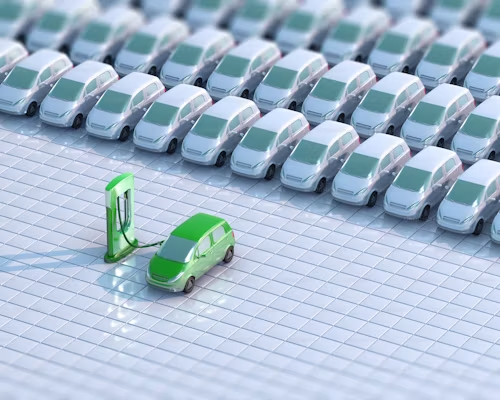
Zero-emission vehicles (ZEVs) are seen as a critical component in the push towards a greener future. These vehicles run entirely on alternative energy sources such as electricity, thus eliminating tailpipe emissions. The development of ZEVs is supported by advancements in smart car technology, including:
- Battery Technology: Improved battery technologies have led to increased storage capacity, faster charging times, and longer ranges.
- Regenerative Braking: This feature converts a portion of the energy used in braking back into stored energy, which is used to charge the battery.
- Smart Grid Integration: Smart cars can communicate with the power grid to determine the best times to charge based on electricity demand and rates.
The proliferation of ZEVs is also facilitated by governmental policies like subsidies, tax rebates, and investment in charging infrastructure, making them more accessible to the average consumer.
The Impact of Smart Car Technologies on Society and Environment
The integration of smart car technologies and the shift towards zero-emission vehicles have profound impacts on both society and the environment:
- Reduction in Road Accidents: ADAS and autonomous driving technologies significantly reduce the risk of accidents caused by human error.
- Decrease in Greenhouse Gas Emissions: By shifting to ZEVs, we can drastically cut down on the emissions contributing to global warming.
- Improved Air Quality: Zero-emission vehicles help in reducing air pollutants, which can lead to better public health outcomes.
The transition to smart, zero-emission vehicles is not just a technological upgrade but a necessary evolution to meet the environmental challenges of our times while enhancing road safety and efficiency.
Conclusion: The Road Ahead for Smart Vehicle Technology
As we move forward, the continued advancement in smart car technology and the expansion of zero-emission vehicle fleets are key to achieving sustainable transportation solutions. While there are challenges in terms of costs, technology integration, and infrastructure development, the benefits these technologies bring to individuals, society, and the environment make them an indispensable part of our future. With ongoing enhancements and retrofitting options, even older vehicles can join the smart revolution, ensuring that no car is left behind in this technological leap.
The journey towards a smarter, cleaner driving experience is well underway, and with each innovation, we move a step closer to a more sustainable and efficient future.