The Era of Smart Car Engineering: Revolutionizing Performance and Innovation
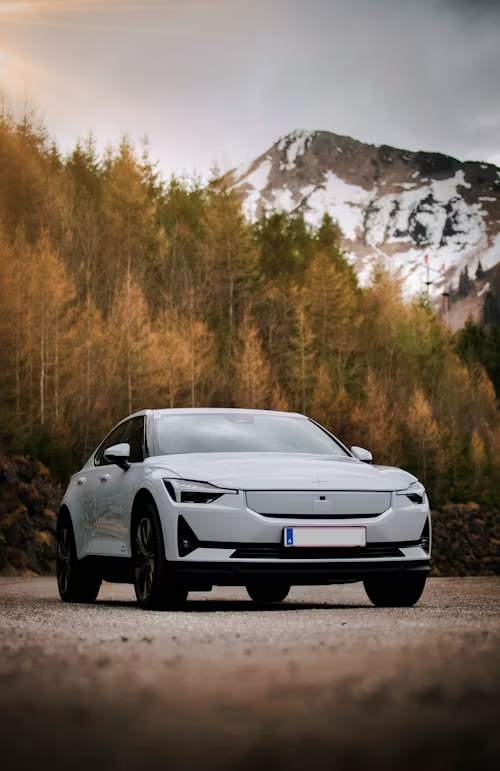
Smart cars are swiftly transitioning from niche novelty to mainstream necessity, spurred by advancements in technology and increasing consumer awareness about sustainability and convenience. The smart car revolution is not just reshaping our views on transportation but is also setting new standards in automotive performance, engineering, and services. This comprehensive exploration delves into the multifaceted world of smart car engineering, performance metrics, and the pivotal role of smart car consulting in driving this automotive transformation.
Understanding Smart Car Engineering
Smart car engineering encompasses a broad spectrum of technologies, all aimed at augmenting the driving experience, enhancing safety features, and optimizing vehicle performance. Central to this engineering philosophy is the integration of advanced electronics, software, and connectivity solutions that enable cars to perform functions traditionally requiring human input.
- Autonomous Driving Systems: These systems use sensors, cameras, and AI algorithms to navigate and drive the car without human intervention.
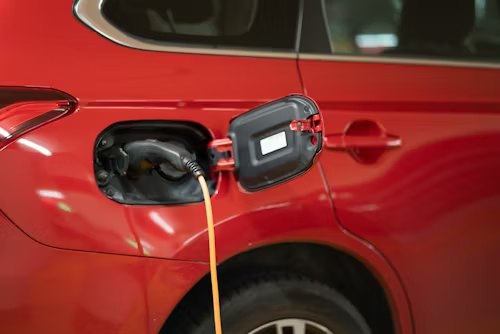
- Energy Efficiency Technologies: From hybrid engines to fully electric solutions, smart cars utilize high-efficiency technologies that reduce environmental impact.
- Connectivity Enhancements: This feature allows vehicles to communicate with each other and with road infrastructure, enhancing traffic management and safety.
Smart car engineering also focuses on the software that operates these complex systems, ensuring updates and maintenance can be managed remotely, enhancing convenience for car owners.
The Smart Car Revolution: A Closer Look at Market Dynamics
The smart car revolution is propelled by a convergence of factors that advocate for enhanced automotive efficiency and smarter resource management. Consumer preferences have dramatically shifted toward vehicles that offer connectivity, autonomous driving, and energy efficiency—qualities that define smart cars.
- Consumer Demand for Enhanced Mobility: With urbanization, there is a growing need for more efficient and flexible mobility solutions, especially in congested cities.
- Technological Advancements: Breakthroughs in IoT, machine learning, and sustainable technologies have enabled the practical implementation of smart car features.
- Regulatory Support: Governments worldwide are increasingly supportive of smart car technologies due to their potential to reduce carbon footprints and enhance road safety.
These drivers are not only fostering a new market but are also sculpting the regulatory and competitive landscape of the automotive industry.
Measuring Smart Car Performance
Performance in smart cars is measured not just by speed or engine output, but by an array of parameters that reflect their technological prowess and efficiency. Key performance indicators include:
- Energy Consumption: How efficiently a smart car uses fuel or electricity significantly impacts its appeal and operational cost.
- Safety Features: The effectiveness of automated safety systems, such as automatic braking and lane-keeping assist, is crucial for consumer trust and acceptance.
- User Experience: The integration of technology should enhance, not complicate, the driving experience. Ease of use and intuitive interfaces are critical.
Performance testing in smart cars also involves rigorous simulation and real-world experiments to ensure that they meet stringent safety and efficiency standards before they hit the market.
Role of Smart Car Consulting
In an industry as complex and rapidly evolving as smart automotive, consulting services play a crucial role in navigating market trends, technological advancements, and regulatory challenges. Smart car consulting firms offer expertise in:
- Market Analysis: Helping businesses understand market demands and consumer preferences to tailor products accordingly.
- Product Development: Assisting in the design and implementation of smart technologies in vehicles.
- Regulatory Compliance: Ensuring that new smart car designs adhere to international safety and environmental regulations.
Moreover, smart car consultants act as vital connectors between technology developers, automotive manufacturers, and end-users, facilitating smoother transitions of new technologies from the lab to the road.
Future Prospects and Challenges in Smart Car Innovation
As we venture further into the era of smart vehicles, several prospects and challenges loom on the horizon:
Prospects
- Integration with Smart Cities: Smart cars could seamlessly integrate with smart city infrastructures, leading to more efficient urban transport systems.
- Advancements in Autonomous Technologies: Ongoing improvements in AI will make autonomous cars even more reliable and capable.
- New Business Models: Opportunities for new services and business models, like on-demand vehicle access, are expanding.
Challenges
- Cybersecurity Risks: With increased connectivity, protecting vehicles from cyber threats becomes more complicated.
- Technological Disparities: Bridging the gap between current technologies and those required for fully autonomous driving is still a considerable challenge.
- Regulatory Hurdles: Creating a unified regulatory framework for globally distributed smart car technologies poses significant challenges.
The smart car revolution is not merely an evolution of how cars are designed or function but is a comprehensive overhaul of our transportation paradigm. With smart car engineering at its core, supported by rigorous performance standards and expert consulting, the road ahead is as promising as it is complex. For automakers and tech innovators alike, the journey towards smarter, safer, and more efficient transportation continues to unfold, driven by both challenges and immense opportunities.
As we embrace this shift, staying informed and engaged with the latest trends and technologies in smart car engineering will be crucial for anyone involved in the automotive industry, from engineers to executives, and from regulators to the end-users.