Driving Towards the Future: How Smart Cars are Leading the Way in Automotive Sustainability and Innovation
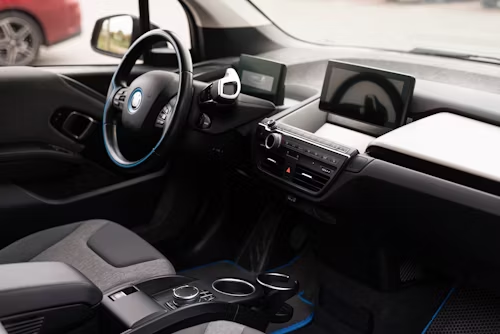
The automotive industry is undergoing a significant transformation, with smart cars at the forefront of this technological and environmental revolution. These advanced vehicles, equipped with cutting-edge technology and sustainable practices, are not just changing how we drive but also significantly impacting the environment and urban planning. This blog post explores the exciting world of smart cars, focusing on their sustainability features, the latest upgrades, and the overall revolution they are bringing to our roads.
What Makes Smart Cars Sustainable?
Smart cars are designed with sustainability at their core, integrating various features that help reduce their environmental impact. This approach to eco-friendly driving includes several key aspects:
- Energy Efficiency: Most smart cars are either fully electric or hybrid, significantly reducing the use of fossil fuels. This shift is crucial in decreasing greenhouse gas emissions and pollution.
- Advanced Materials: The construction of smart cars often involves lightweight and recycled materials, which not only reduce the overall weight and increase efficiency but also lessen the environmental impact of production and disposal.
- Intelligent Design: Aerodynamics play a critical role in the design of smart cars. More streamlined vehicles experience less drag, which improves fuel efficiency and reduces energy consumption.
Innovative Technologies Enhancing Smart Car Sustainability
Technology is at the heart of the smart car revolution, driving advancements that not only improve performance but also enhance sustainability:
- Regenerative Braking: This technology converts the kinetic energy typically lost during braking into electrical energy, which is then stored in the battery. This feature is particularly effective in city driving where stopping frequently is common.
- Energy Management Systems: Smart cars are equipped with sophisticated systems that monitor and adjust energy use and distribution based on real-time driving conditions, optimizing battery use and extending range.
- Autonomous Driving Features: While still in the early stages, autonomous technologies reduce the need for constant acceleration and braking, leading to more efficient driving and lower energy consumption.
Recent Smart Car Upgrades Revolutionizing the Market
As technology evolves, so too do smart cars. Recent upgrades have pushed the boundaries of what these vehicles can do, offering drivers enhanced performance, greater comfort, and improved environmental friendliness:
- Enhanced Battery Technology: New developments in lithium-ion batteries have led to lighter, more efficient, and longer-lasting batteries, significantly extending the travel range of electric smart cars.
- Improved Connectivity: Modern smart cars offer superior connectivity options, integrating seamlessly with mobile devices and smart home systems, which allows for better energy management and vehicle efficiency.
- Advanced Driver-Assistance Systems (ADAS): These systems, which include features like adaptive cruise control and lane-keeping assist, not only make driving safer but also more fuel-efficient by maintaining optimal speed and reducing unnecessary fuel use.
Case Studies: Smart Cars in Action
To better understand the impact of smart cars, let's examine a few real-world case studies that highlight their sustainability and revolutionary technology:
- Case Study 1: City Fleet Integration: Many cities worldwide are integrating smart cars into their public service fleets. These vehicles are used for everything from police cars to public transportation, reducing CO2 emissions and fuel consumption urban-wide.
- Case Study 2: Car Sharing Programs: Services like Car2Go and Zipcar have embraced smart cars, allowing cities to reduce the number of vehicles on the road, which diminishes traffic congestion and pollution.
- Case Study 3: Autonomous Taxi Services: Pilot programs for self-driving car services are underway in several major cities. These services suggest a future where smart cars can be summoned on demand, minimizing the need for personal car ownership and its associated environmental footprint.
The Future of Smart Cars: Predictions and Trends
Looking towards the future, the trajectory for smart cars is both exciting and optimistic. With advancements in AI, battery technology, and renewable energy sources, here are some trends and predictions for the future of smart cars:
- AI Optimization: Future smart cars will utilize artificial intelligence to further optimize driving patterns, energy use, and even traffic management in real-time.
- Integration with Renewable Energy: As the grid becomes greener, smart cars will increasingly be charged using renewable energy, thus reducing their carbon footprint dramatically.
- Expanding Autonomous Capabilities: The continued development of autonomous driving technology could lead to completely driverless roads in the next few decades, drastically reducing accidents and improving traffic efficiency.
Conclusion: Embracing the Smart Car Revolution
The era of smart cars is just beginning, and the potential for revolutionary change in both our environment and our lifestyle is immense. By embracing these technological advancements and supporting the transition to smart vehicles, society can look forward to a cleaner, more efficient, and more sustainable future. The journey towards smart car sustainability is not without challenges, but the progress made thus far promises a road ahead filled with innovative solutions and unprecedented opportunities.
Whether you are a car enthusiast, an environmentalist, or simply someone interested in the future of technology, the smart car revolution offers something exciting for everyone. As we continue to explore and expand these technologies, the dream of a fully sustainable and intelligent automotive network becomes increasingly attainable.